Why Small Businesses Are Losing Customers to Competitors Who Show Up Online

If your business is not showing up when someone searches for what you offer, that customer is already gone. They found your competitor. In 2026, online visibility is not a bonus feature for small businesses. It is the difference between a full schedule and an empty one. The good news? The gap between businesses that show up and those that don’t comes down to a few specific things, and all of them are fixable.
The Search Behavior Shift Nobody Warned Small Businesses About
Most small business owners think of Google as a directory. Type something in, get a list of options. Simple. But the way people search has changed dramatically, and it has created a massive gap between businesses that adapted and those that didn’t.
Today, a potential customer doesn’t just search for “plumber near me” and call the first result. They check the Google Business Profile, read the reviews, scan the photos, look at the hours, and then decide. That entire evaluation happens in under two minutes. If your profile is incomplete, outdated, or missing entirely, you lose before the phone even rings.
Businesses in the Frederick, MD area and across the country are discovering this the hard way. Their phones get quieter while a competitor who invested in their online presence keeps getting busier. The search didn’t stop. The customers didn’t go anywhere. They just chose someone else.
What Does “Showing Up Online” Actually Mean?
Showing up online is not just about having a website. A surprising number of small business owners assume that because they built a site five years ago, they have an online presence. That assumption is costing them leads every single day.
Showing up online in 2026 means appearing in the right places, at the right time, for the right search terms. It means your Google My Business profile is optimized and active. It means your business ranks when someone nearby searches for your service category. It means your paid ads are running efficiently so you show up even when organic rankings take time to build.
There are three core channels that determine whether a small business gets found:
Organic Search (SEO): This is your long-term visibility. When someone searches a relevant term, your website either appears or it doesn’t. Most small businesses that haven’t invested in SEO are sitting on page two or three of Google. According to research on search behavior, less than 1% of users ever click to the second page of search results. Page two is essentially invisible.
Paid Search (PPC): Pay-per-click advertising puts your business at the top of search results immediately. It is not a replacement for SEO, but it fills the gap while organic rankings build. When managed correctly, PPC delivers high-intent traffic, meaning people who are actively searching for what you sell right now.
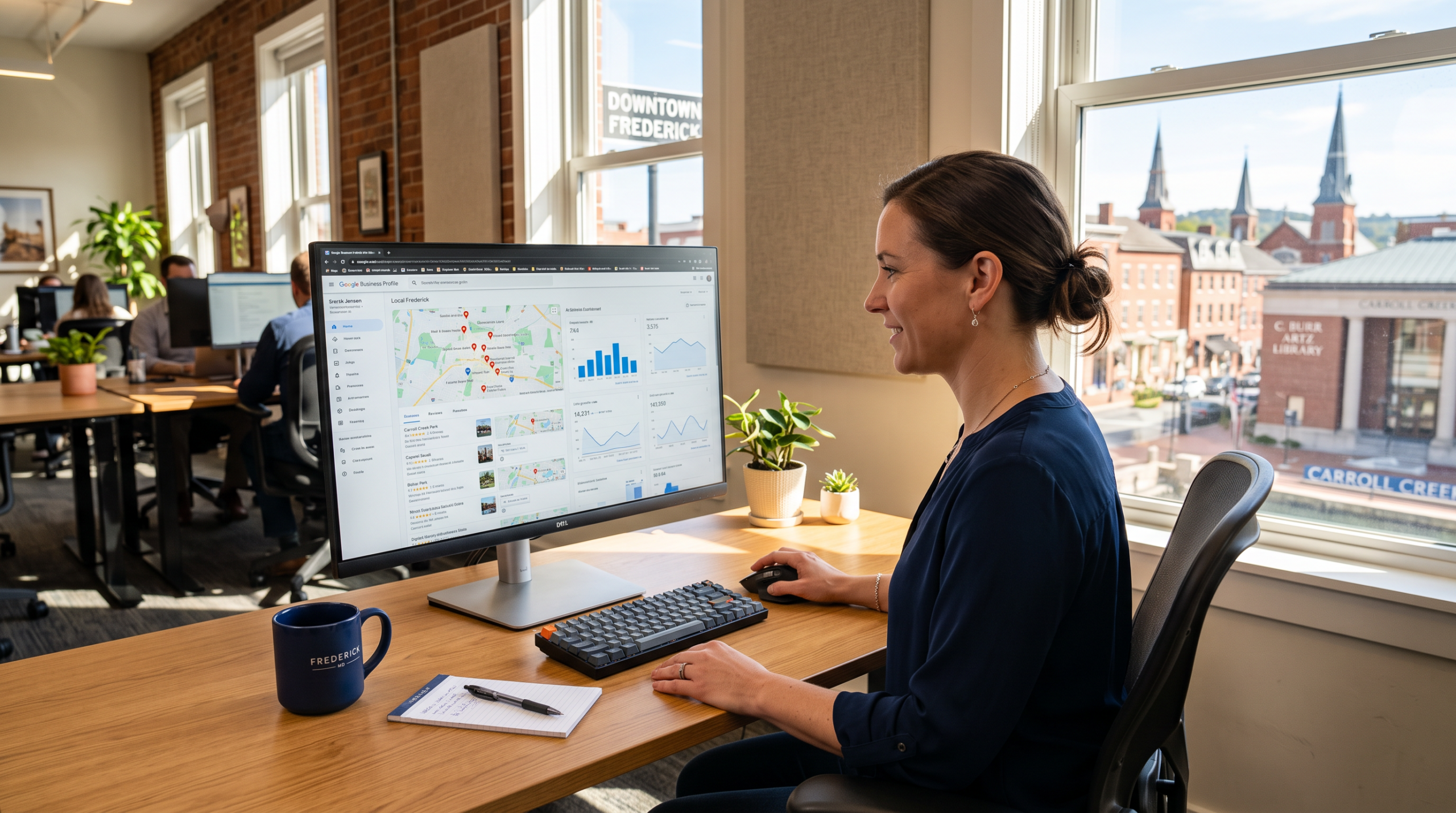
Google Business Profile: This is your local search presence. It controls what appears in the map pack, which is the cluster of three businesses that shows up at the top of local searches. Most people click here before they ever look at the traditional search results below.
The Real Cost of Not Ranking
Here is something most small business owners don’t think about: the cost of bad visibility isn’t just missed leads. It’s the compound effect of losing those customers to a competitor over and over again.
Say a competitor ranks above you for a high-intent search term. Every day, 10 people search that term. Seven of them click on the top three results. Your competitor gets those clicks. You get none. Over a year, that’s thousands of potential customers who never knew you existed.
Marketing and lead generation strategies exist specifically to solve this problem. But the businesses that wait, thinking they’ll get to it “when things slow down,” end up in a cycle where things never slow down because leads never pick up. Poor visibility leads to fewer customers, which leads to less revenue, which makes it harder to invest in fixing the problem.
The businesses dominating local markets in Frederick, MD and nationwide are not necessarily better at what they do. They are better at being found.
Why Google Business Profile Is Often the Fastest Win

For small businesses trying to get more visible quickly, the Google Business Profile (GBP) is often the highest-leverage starting point. It’s free to claim, and a well-optimized profile can move a business into the local map pack faster than almost any other tactic.
Most businesses claim their GBP once and forget about it. That’s a mistake. Google rewards profiles that are actively managed. Posting updates, responding to reviews, adding photos, keeping hours accurate, and answering questions all signal to Google that this is an active, trustworthy business. Businesses that treat their GBP like a living asset consistently outperform those that leave it static.
There’s also a trust factor that goes beyond rankings. When a potential customer sees a profile with 40 five-star reviews, recent photos, and consistent responses from the business owner, they feel confident before they ever make contact. That confidence translates directly into calls, clicks, and foot traffic.
SEO and PPC: Why You Need Both, Not One or the Other
A common mistake small business owners make is treating SEO and PPC as competing options. The reality is that they serve different functions and work best together.
SEO and pay-per-click advertising address two different timelines. SEO builds durable, compounding visibility over months. It’s the foundation. PPC delivers immediate traffic and is ideal for promotions, new service launches, or filling the pipeline while SEO gains traction.
Running both also gives you data. PPC campaigns reveal which search terms actually convert, and that intelligence feeds directly into your SEO strategy. You stop guessing which keywords matter and start investing in the ones proven to bring buyers.
For businesses in competitive local markets, running PPC without SEO means paying for every single click indefinitely. Running SEO without PPC means waiting months to see results. The combination closes the gap and gives small businesses a real shot at competing with larger, more established players.
What Small Businesses Are Missing Without a Real Marketing Strategy
Most small businesses that struggle with online visibility share a common problem: they’ve tried individual tactics without a connected strategy. They boosted a Facebook post here, ran a Google ad there, updated their website once two years ago. None of it connected. None of it compounded.
A real lead generation and marketing strategy treats all of these channels as parts of a whole. Your GBP drives local traffic. Your SEO captures people researching your service. Your PPC captures buyers ready to act today. Your content builds authority over time so Google trusts your site more with every passing month.
Without this connected approach, businesses spend money on tactics that deliver short bursts of activity and no lasting traction. With it, every dollar and every effort builds on the last. That’s the difference between businesses that grind for leads every month and those that generate them consistently.
Small businesses across the country, including many in the Frederick, MD area, have discovered that the moment they stopped piecing together random marketing efforts and adopted a full strategy, their visibility and lead volume changed substantially.
Frequently Asked Questions
Why is my competitor showing up on Google but I’m not?
Your competitor has likely invested in SEO, an optimized Google Business Profile, or paid search advertising. Google ranks businesses based on relevance, proximity, and authority. If your profile is incomplete or your website hasn’t been optimized for local search terms, competitors who have done that work will consistently rank above you. The fix is not instant, but it is straightforward with the right approach.
How long does it take for SEO to show results for a small business?
Most small businesses begin to see measurable movement in search rankings within three to six months of consistent SEO work. Highly competitive markets may take longer. PPC advertising can fill the gap in the short term while organic rankings build. The two strategies are designed to work together, not replace each other.
Is Google Business Profile really that important for local businesses?
Yes. The local map pack, which is powered by Google Business Profiles, appears above traditional organic search results for most local queries. Businesses in the map pack receive the majority of clicks on local searches. An incomplete or unmanaged profile significantly reduces the chance of appearing there, regardless of how good the business actually is.
Can a small business realistically compete with larger companies in search results?
Yes, especially in local search. Larger companies often focus on broad, national terms. Small businesses can rank for specific local searches where competition is lower and buyer intent is higher. A well-run local SEO strategy combined with an active GBP gives small businesses a meaningful competitive edge in their own backyard.
What happens if I run PPC ads without fixing my website or GBP first?
You’ll spend money on clicks that don’t convert. PPC drives traffic, but if the landing page is slow, unclear, or untrustworthy, visitors leave without taking action. Before running paid ads, it’s worth ensuring your website and GBP are set up to convert the traffic you’re paying to attract.
The Bottom Line
Customers are searching for what you offer right now. The only question is whether they find you or your competitor. In 2026, showing up online is not optional for small businesses that want to grow. It requires a connected strategy that covers Google Business Profile, SEO, and paid search working together.
OnePoint Business Solutions works with small businesses to build exactly that kind of presence, from Google My Business optimization to full lead generation strategies that bring in consistent, qualified traffic. If you want to know exactly where your business stands online right now, get a free internet marketing analysis at freeinternetaudit.com. Questions? Contact us through our website today!